FOOTWEAR · PRODUCTION PLAYBOOK

Footwear imagery that stays consistent at catalogue scale.

Footwear teams manage size and colour variants where angle consistency strongly affects comparison. This playbook covers capture inputs, editing decisions, department handoffs and the quality controls needed to protect clean soles, natural leather texture, level pairs and repeatable elevation.
Start a production order Read support guidance
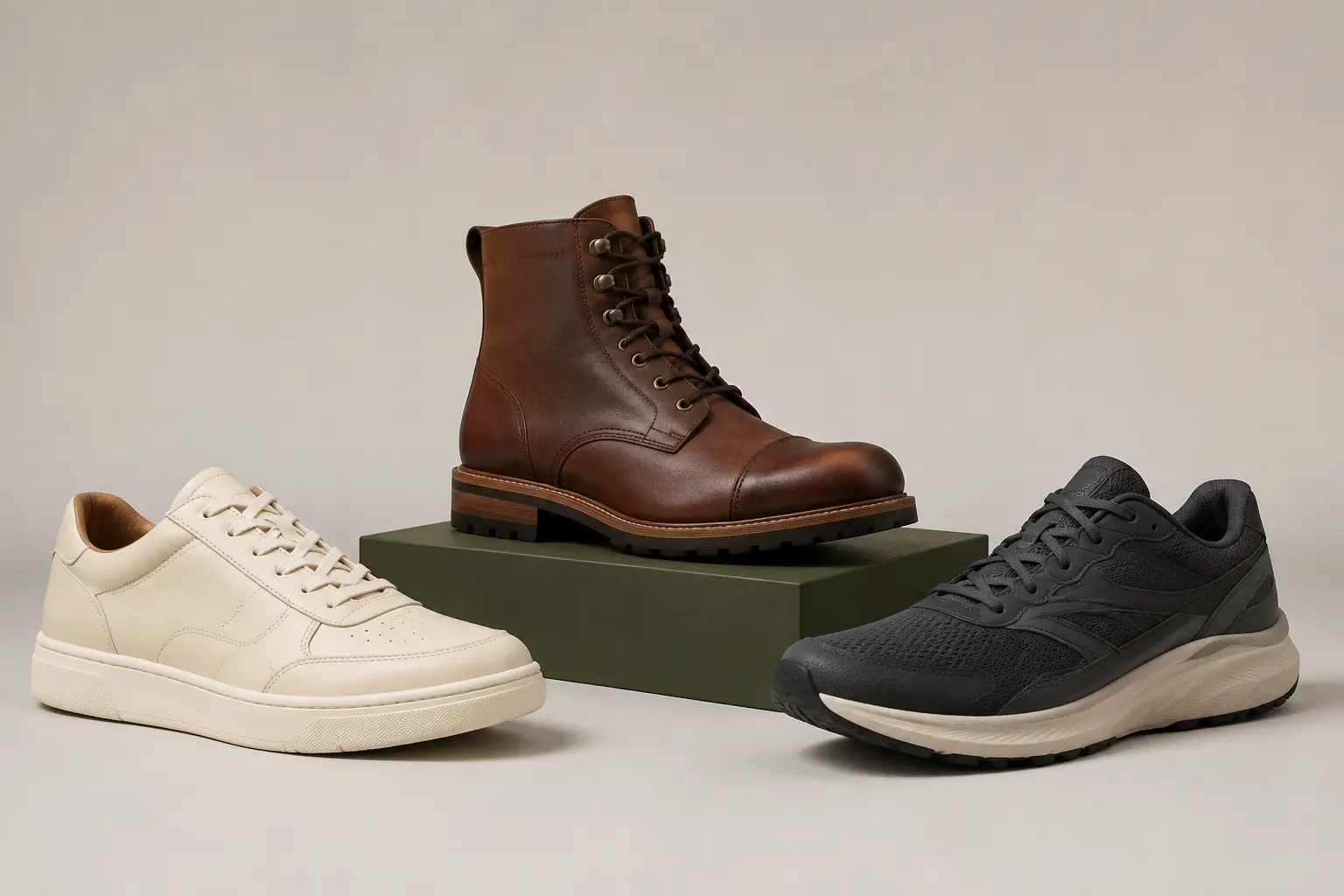
Illustrative footwear ecommerce product photography
Specialist production · Independent quality control
Modelled volume1,800 images across 300 styles
Sourcethree-quarter, side, sole, pair and material-detail views
Main channelbrand stores, retailers and footwear marketplaces
QC focustoe shape, sole cleanliness, laces, stitching, hardware and shadow direction
01

A production brief your team can reuse

Preserve grain and stitching. Clean removable sole marks, do not reshape the toe, align the lowest sole point to the guide and match shadow direction across every colourway. Common jobs include background removal, sole and dust cleanup, pair alignment, leather retouching, colour consistency, contact shadow. The approved decisions become a versioned specification rather than disappearing into email.

02

Lock camera angle before fixing spacing

Alignment cannot rescue a catalogue where three-quarter views are captured at different rotations. Group images by view and style, choose an approved angle reference, and flag exceptions rather than warping shoes to fit.

03

Protect construction detail

Stitching, edge paint, welt texture, perforation and leather grain carry product information. Cleanup should remove dust and temporary scuffs without softening those features or making one material look like another.

04

Treat pairs as a small composition

Pair images require consistent overlap, height and toe direction. The contact shadow must connect both shoes to the same surface without hiding sole shape.

05

Move the full range without losing product identity

Device, folder and secure-link uploads keep source names attached to the order. Department roles separate preparation, product questions, review and billing. Approved masters can then become controlled outputs for brand stores, retailers and footwear marketplaces, while exceptions remain visible instead of blocking the entire range.

PRACTICAL ANSWERS

Questions teams ask before production.

01Can Rupato make supplier photography consistent?

Yes, within what the source allows. Extreme angle or lens differences should be reshot rather than digitally distorted.

02Are manufacturing marks removed?

Only when the brief identifies them as temporary defects. Authentic material variation and product construction should remain.

03Can outputs be grouped by style and colour?

Yes. A stable style-colour-view naming rule keeps upload, review and delivery together.

ONE ORDER OR A COMPLETE CATALOGUE

Make the brief clear before the first file moves.

Rupato keeps uploads, specifications, tasks, review and delivery attached to the same production record.

Start an order